Yearly Archives: 2008
“Three on a Match†on TCM & DVD
/Match9.jpg)
Three on a Match is going to air on Tuesday, March 4th at 12:00am EST (Monday night/Tuesday morning).
 Three on a Match was the first Ann Dvorak movie I ever saw and it is still my favorite. Directed by Mervyn LeRoy and running slightly over an hour, it’s a tight, gritty, shocking film centering on the demise of Ann Dvorak’s character. With Joan Blondell, Bette Davis, Lyle Talbot, Warren William, Humphrey Bogart, Edward Arnold and Allen Jenkins, among others, it’s classic early 1930s Warner Bros. This midnight showing on TCM winds down an all day tribute to pre-code cinema, coinciding with the release of the second Forbidden Hollywood box set coming out on Tuesday.
In addition to Three on a Match, this pre-code set also features The Divorce and A Free Soul with MGM first lady Norma Shearer, Female starring Ruth Chatterton (I love this one), and Barbara Stanwyck in Night Nurse. Add on the new pre-code documentary and this one is sure to be a crowd pleaser. Looking forward to this baby arriving in the mail on Tuesday.
Collection Spotlight – George Hurrell Photos
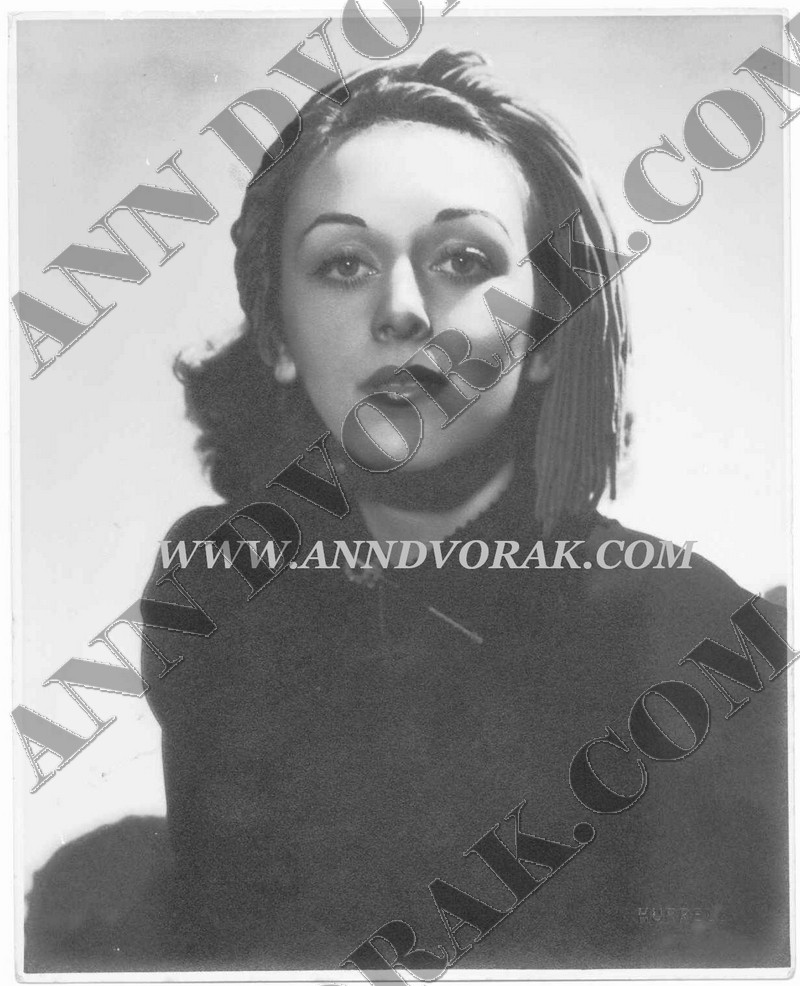
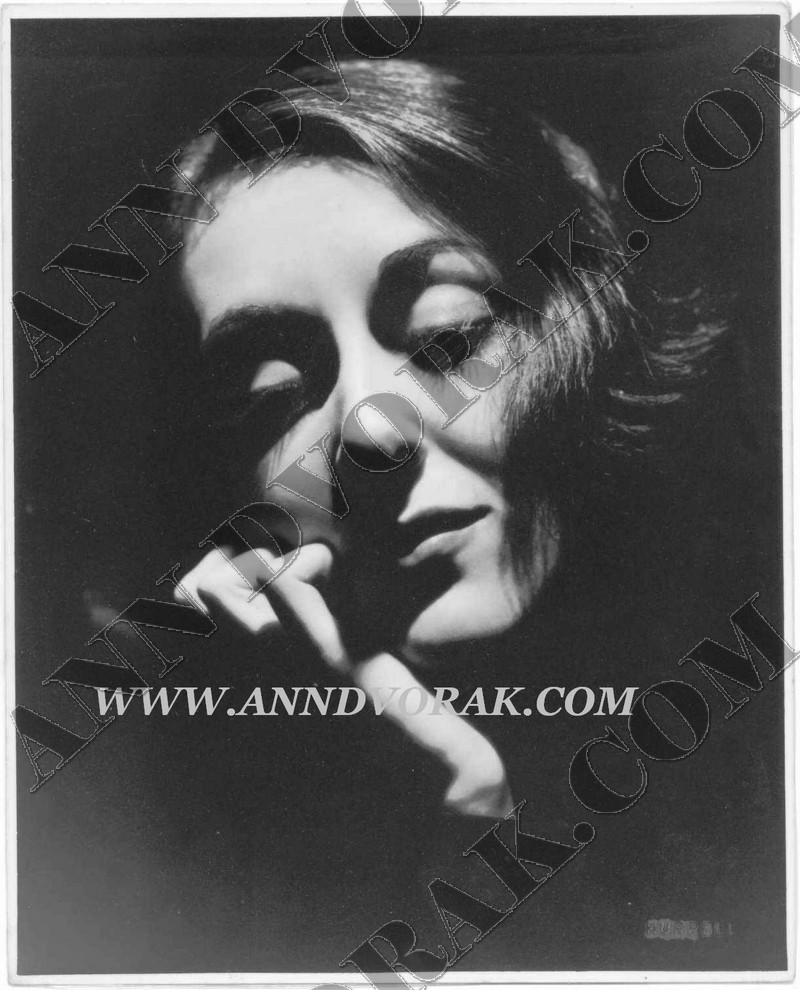
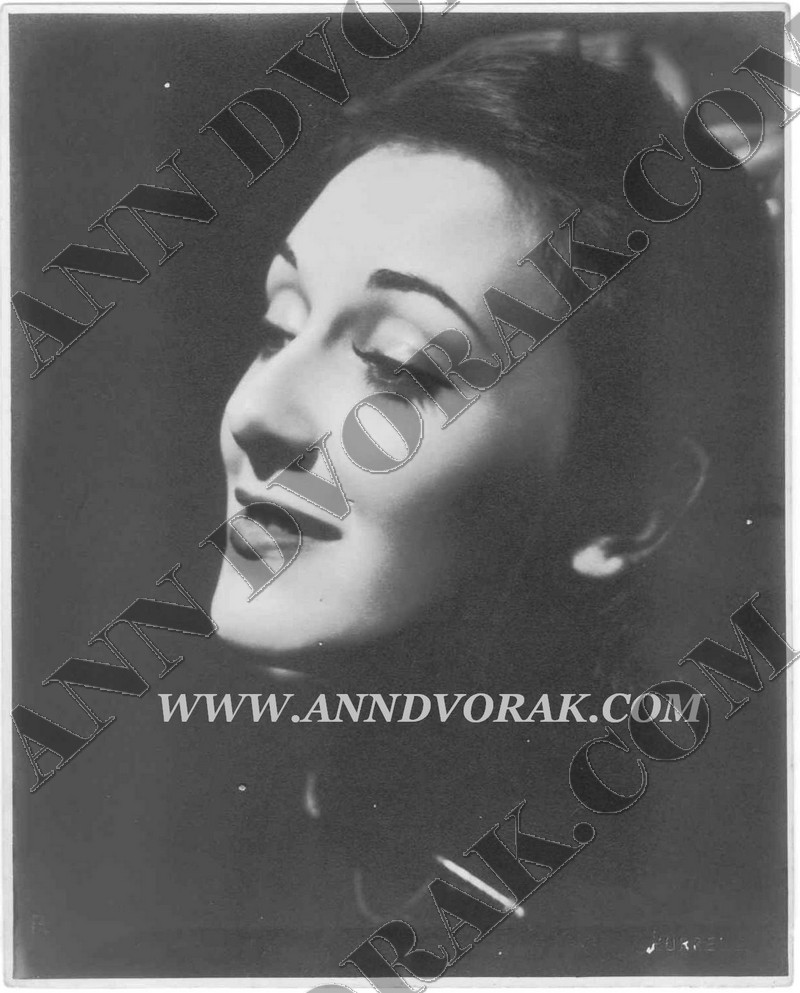
In December 1936, Ann Dvorak wrapped up filming on The Case of the Stuttering Bishop, picked up her final paycheck from Warner Bros and left the Burbank studio for the last time. After nearly five years of battles over money, bad roles and suspensions, Dvorak’s contract was terminated (at her urging), and she entered the arena of freelance acting. One of the first things she did with her new-found freedom was visit the studio of famed Hollywood photographer George Hurrell.
 By 1937 Hurrell had more that established himself as the preeminent Hollywood glamor photographer. After a two and a half year stint as Head Portrait Photographer at MGM, Hurrell set up a studio at 8706 W. Sunset Blvd where the stars could come to him. It was here where Ann Dvorak more than likely went to have the master photographer work his magic for her. At the time, Hurrell was also contributing monthly portraits to Esquire magazine and one of his Dvorak photos was featured in the June 1937 issue.
The three portraits in my personal collection belonged to Ann Dvorak. In 2003 I somehow tracked down an antique dealer on the North Shore of Oahu, who had come into possession of the contents of Ann’s storage unit after she died. While most everything had been destroyed by a Hawaiian hurricane years ago, some photos remained including the three double weight embossed Hurrells. At the time, I was unaware that she ever sat for him and was stunned to come across these. I am terrible haggler and it took much whining on the part of me, my mother and the antique dealer’s wife to lower his asking price, but he finally caved (a bit).
A few months later, I interned in a photo-archive which contained three more Hurrell’s of Ann, one with husband, Leslie Fenton (no, those never came home with me!).
“G Men” on TCM
‘G’ Men is going to air on Turner Classic Movies on Monday, February 25th at 8:30am EST.
/GMen6.jpg)
This Day in Ann Dvorak History
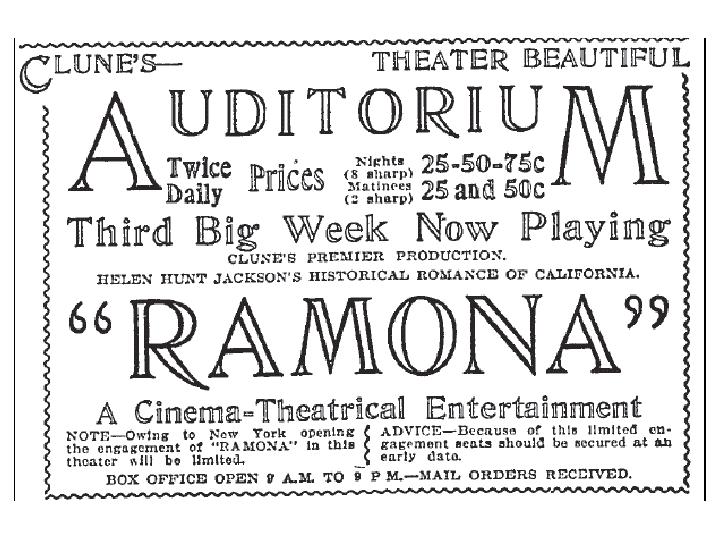
Ann Dvorak is known to movie buffs as a leading lady of the 1930s/1940s, but she actually made her film debut on February 7, 1916, when Ramona premiered at Clune’s Auditorium in Downtown Los Angeles.
Based on the immensely popular novel by Helen Hunt Jackson, Ramona was a major production directed by Donald Crisp and filmed at various locations around Southern California. I am not sure how a four-year-old Ann Dvorak became involved, but since her mother was acting in westerns at the time, it must have been a family connection that got the youngster the role.
This heavily romanticized tale set in California after the Mexican-American War, period had previously been filmed in 1910 as a 17 minute short by D.W. Griffith. The 1916 version ran around 12 reels (about as long as The Birth of a Nation), and was highly anticipated, esp by Southern California residents who looked upon the story as almost local mythology. Despite being completely fictional, the movie was shot on locations described in the book, many which became draws for tourists wanting to witness where Ramona lived and breathed.
Credited as “Baby Anna Lehr,” Dvorak portrayed the title character as a child in the prologue. Despite a limited amount of screen time the youngster received rave reviews. The day after the premiere, the Los Angeles Evening Herald proclaimed:
“Of all the Ramonas, the most charming and heart luring is the child of four, played with rare childish artistry by little Miss Anna Lehr. Probably the most disappointing feature of the entire production is the fact that this sweet youth remains on the canvas only a few brief moments.”
A couple of weeks later, another local paper ran a feature on the actress, complete with a portrait and the headline “Anna Lehr Great Hit in Ramona.” Unfortunately, we will probably never get the chance to see if Ann’s film debut lived up to the hype, as only reel #5 is known to exist (I think at the Library of Congress).
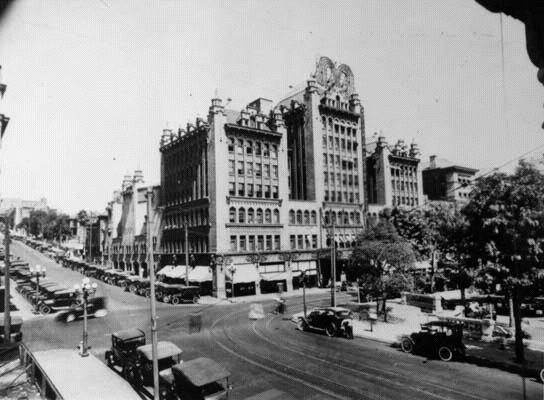 On a side note, Clune’s Auditorium, located on the corner of 5th and Olive in Downtown Los Angeles, was originally the Temple Baptist Church. William Clune leased the 2,700 seat theatre from roughly 1915-1920 before it became home to the Los Angeles Philharmonic. Commonly known as the Auditorium Building, the location has been a parking lot since the mid-1980s and will soon feature an overpriced condominium complex.
This concludes This Day in Ann Dvorak History.
Collection Spotlight – CS Bull Photos
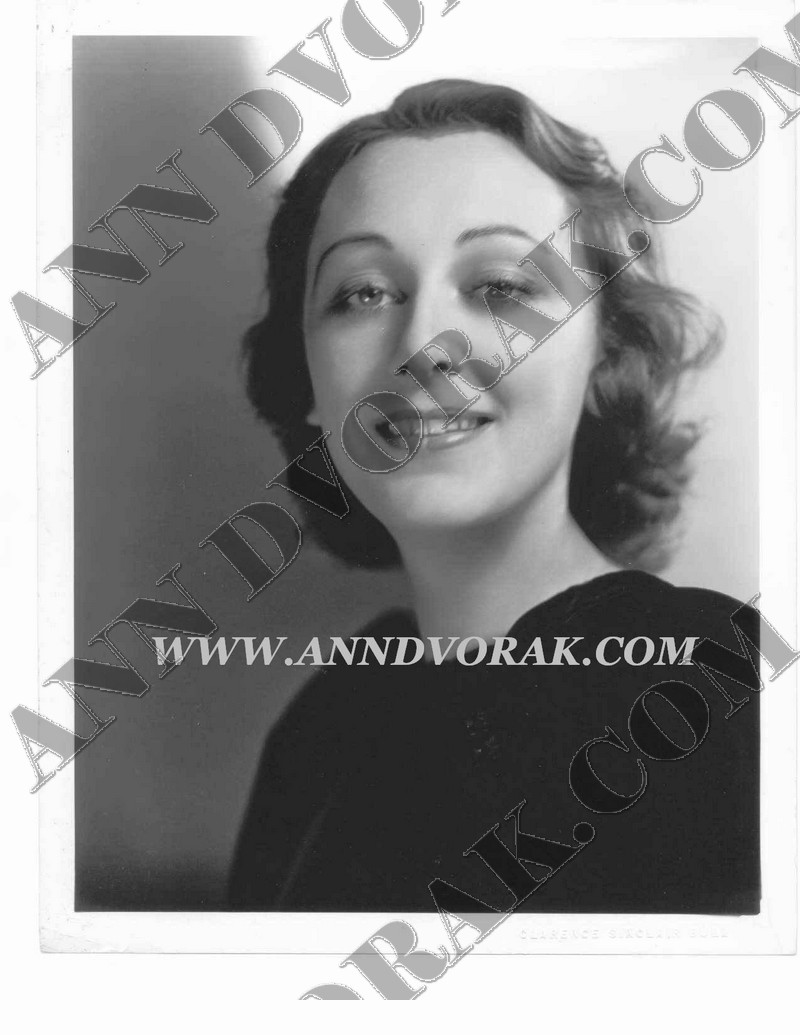 Ann Dvorak was a chorus girl/assistant choreographer at MGM from 1929-1931. She desperately wanted to get out of the chorus and into acting roles, and even had Joan Crawford rooting for her, but the studio would not give the teenage dancer anything more substantial than extra parts. Since MGM appears to have had no interest in promoting Ann as a full-fledged actress, it’s interesting that Clarence Sinclair Bull, the head of the stills department, took portraits of her.
Prior to the portrait session, Bull had photographed Ann on a Los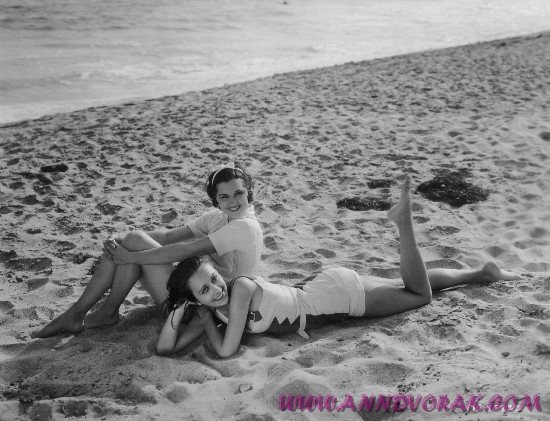 Angeles beach with Marjorie King (alleged namesake of the margarita). When Ann first began dancing at MGM, it was under her mother’s name, Anna Lehr. By the time of the beach session, she had christened herself Ann Dvorak, but apparently had not decided on the spelling. The snipe on this back of the photo credits her as Ann Devorak as does this Cine-Mundial 1931 magazine with a cover copied from one of the Bull beach photos. The portrait credits her as “Ann Dvorak, MGM contract player,” but she still played around with her new stage name after leaving Metro, signing her Howard Hughes contract as D’Vorak.
The portrait is printed on that great MGM double-weight matte paper and embossed with the photographer’s name. I love this photo not only because it was taken when Ann was a no-name chorine, but because she is so young and has yet to receive the full Hollywood glamor treatment. In a few short months, Ann Dvorak would be introduced to audiences with a strikingly different look.
“Merrily We Live” on TCM
Merrily We Live is going to air on Turner Classic Movies on Wednesday, January 23rd at 2:45pm EST.
/Merrily2.jpg)
This 1938 Hal Roach Studios comedy stars Constance Bennett as the spoiled socialite whose zany family takes in a successful author (Brian Aherne) as their chauffeur when they mistake him for a tramp in need of assistance. Ann Dvorak appears in a very brief role as a senator’s daughter who has the hots for Aherne.Although Merrily We Live is pretty much a My Man Godfrey remake (and not as good), it is still a lot of fun and definitely worth watching. Billie Burke received her only Oscar nomination for playing the scatterbrained family matriarch and she is a joy to watch.
Ann Dvorak does not have a whole lot to do, but makes the most of her minor role as a high society hussy. Her name in this one is Minerva Harlan which gets my vote as ‘Best Moniker For an Ann Dvorak Character” (Miss Beulah Boyd, her name in Friends of Mr. Sweeney, is a close second). Ann’s hair and clothing in Merrily We Live is fairly hideous, but she still manages to look beautiful.
This film is definitely a crowd pleaser, so enjoy!
This Day in Ann Dvorak History
/SkyDevilsL2.jpg)
On January 15, 1932, the film going public was officially introduced to Ann Dvorak when Sky Devils debuted at the United Artists Theatre in Downtown Los Angeles, at Broadway & 9th.
She had appeared in three silent films as “Baby Anna Lehr” and could be found hoofing her way through twenty-five or so MGM features and shorts, but this was this first time the name Ann Dvorak appeared in a film credit (she initially worked at MGM under the name Anna Lehr). In actuality, Sky Devils was the second film Ann shot under her newly inked contract with Howard Hughes’ Caddo Company. The release of Ann’s first film, Scarface, would be delayed another two months while Hughes battled with censors. Dvorak’s role as “the inevitable girl”* in this aviation comedy pales in comparison to Cesca Comonte, her tragic character in the classic gangster flick, and it’s unfortunate that Scarface’s censorship issues prevented her career from beginning with a bang.
This concludes This Day in Ann Dvorak History.
*”United Artists Shows Hughes Sky Thriller.” Los Angeles Times, January 17, 1932
“G Men” on TCM
‘G’ Men is going to air on Turner Classic Movies on Thursday, January 10th at 1:15am EST.
/GMen7.jpg)
This 1935 FBI drama with James Cagney playing on the right side of the law was the second and (alas) last time he was paired with Ann Dvorak (the first being The Crowd Roars). Even though Margaret Lindsay is the main love interest, Dvorak’s character who pines for Cagney but settles for thug Barton MacLane is a much more interesting role. Her introduction as a night club singer/dancer who flirts with Cagney while performing “You Bother Me an Awful Lot” is a great showcase of her musical talents. Her cold-blooded murder and death scene remind us why she was touted as the next big thing in 1932.
Even though her role is not a big one, Ann Dvorak is a definite presence in ‘G’ Men and the film demonstrates what she was capable of as an actress when given the chance. Her 20+ year career was comprised of many mediocre films, so ‘G’ Men is one of the few highlights (and one of the few Dvorak titles available on DVD).
Ann Dvorak Does the Hoosier Hop
/GreatLife3.jpg)
Watch Ann Dvorak do the Hoosier HopÂ
I love YouTube and am so grateful to the handful of individuals who routinely post clips of bizarre numbers from early sound musicals. Ann Dvorak was an MGM chorine and assistant choreographer to Sammy Lee from 1929-1931 and shows up in many features and shorts. Despite the flailing arms and sometimes clumsy footwork (which apparently was the style at the time), Ann is usually the enthusiastic standout in the musical numbers. In scene stills, she is usually (as my husband calls it) spiking the camera with her goofy but adorable 17-year-old grin.
This clip is from 1929’s It’s a Great Life starring vaudevillians Vivian and Rosetta Duncan, aka the Duncan Sisters. Ann is just to the left of Vivian (the Duncan sister on the left) and takes center stage with another gal when the sisters exit. Apparently, Ann was responsible for coming up with these dance steps, called the “Hoosier Hop” which may explain why she looks especially exited during this number.
I love this clip not only because a teen-aged Ann is featured dancing her little heart out to her own choreographic creation, but also because it is in two-strip Technicolor. These early MGM musicals marked the only time is her career that Ann was filmed in color.
Nothing like a little Hoosier Hoppin’ to start the New Year!